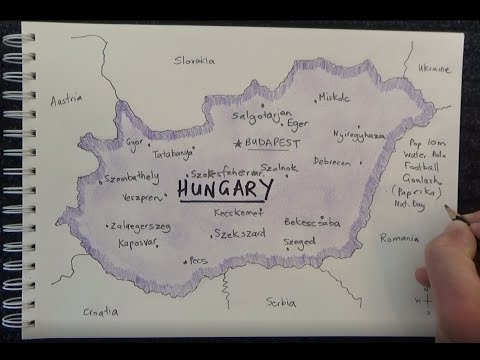
ASMR: HUNGARY Regions Map Outline and Cities | Key Facts and Highlights | ASMR maps and facts

ASMR maps and facts! Nestled in the heart of Europe, HUNGARY unfolds like a land of historical legacies. With Budapest, its capital, straddling the majestic Danube River, the country weaves a tale that spans centuries, blending the old-world charm with a modern vibrancy.
#asmrfacts #asmrgeography #geographyfacts #geography #asmrwhispering #whisperedfacts #asmrtravel #asmrtravels #hungary #budapesttravel #budapesthungary #budapestvlog #budapest2023 #hungarytravel #hungarylife
Largest Thermal Water Cave System: Hungary is home to the world's largest thermal water cave system, located in the Bükk Mountains. The Baradla Cave, part of this system, is also one of the longest caves in Europe.
Diverse Cuisine: Hungarian cuisine is known for its rich flavors and use of paprika. Goulash, a traditional Hungarian dish, is a hearty stew made with meat and vegetables, seasoned with paprika.
Széchenyi Chain Bridge: The Széchenyi Chain Bridge in Budapest was the first permanent bridge across the Danube River in Hungary. It opened in 1849 and is a symbol of Budapest.
Lajos Kossuth Square: Kossuth Square in Budapest is one of the largest squares in Hungary and is named after Lajos Kossuth, a key figure in Hungary's fight for independence.
The Hungarian Crown: The Holy Crown of Hungary, also known as the Crown of Saint Stephen, is a national symbol. It is one of the oldest crowns in Europe and is on display in the Hungarian Parliament Building.
Unique Numbering of Houses: In many Hungarian cities, the houses are numbered based on the order in which they were built on a particular street rather than following a sequential system.
Puskás Ferenc Stadium: Named after the legendary Hungarian footballer Ferenc Puskás, the Puskás Ferenc Stadium in Budapest is one of the largest stadiums in Hungary.
Tokaj Wine Region: The Tokaj wine region is famous for its sweet dessert wine, Tokaji. The region has a long winemaking history and is a UNESCO World Heritage Site.
Rubik's Cube Championship: The Rubik's Cube was invented by Hungarian architect Ernő Rubik. Hungary hosts the Rubik's Cube World Championship, attracting enthusiasts from around the globe.
The Great Market Hall: Budapest's Great Market Hall (Nagyvásárcsarnok) is a bustling market where visitors can find a variety of Hungarian products, including fresh produce, spices, and traditional crafts.
Tisza River: The Tisza River, the second-longest river in Hungary, flows through the eastern part of the country. The Tisza is known for its meandering course and diverse ecosystems along its banks.
Rákóczi Ferenc Bridge: Also known as the Lágymányosi Bridge, this cable-stayed bridge in Budapest is one of the most modern and striking structures connecting Buda and Pest.
Invention of the Ballpoint Pen: László Bíró, a Hungarian-Argentinian journalist, invented the ballpoint pen in 1938. The invention revolutionized writing instruments.
Hungarian Parliament Building Lights: The Hungarian Parliament Building in Budapest is illuminated at night, showcasing a stunning light display. The building is particularly captivating during special events and holidays.
Hortobágy National Park: This is Hungary's largest national park, known for its vast plains, traditional Hungarian horsemen (csikós), and diverse birdlife. It is also a UNESCO World Heritage Site.
Last updated:



![Guess the flag ASMR [Hungary]](https://i.theasmrindex.com/uploads/thumbs/hG8bPcyrE4Q.jpg)