ASMR : Ancient BABYLON city in 30 Facts | ASMR soft spoken facts

ASMR facts ! Ancient Babylon, a legendary city that thrived along the banks of the Euphrates River in Mesopotamia. From the iconic Hanging Gardens, one of the Seven Wonders of the Ancient World, to the renowned Code of Hammurabi, witness the cultural and architectural marvels that defined this ancient metropolis. Join us on a journey through time to discover the achievements of Babylon under rulers like Nebuchadnezzar II, its role in the development of cuneiform writing, and the city's ultimate decline and fall. Uncover the mysteries of this influential center of civilization, where diverse cultures converged, leaving an enduring legacy that continues to captivate historians and enthusiasts alike. Step into the heart of Ancient Babylon and delve into the stories etched in its ruins, revealing the splendors of a bygone era.
#asmrfacts #asmrhistory #historyfacts #asmrwhispering #historyfacts #AncientBabylon #History #Archaeology
Foundation and Early History:
Babylon's history dates back to the 18th century BCE when it was a small Akkadian town known as Babilu.
It rose to prominence under the rule of Hammurabi (1792–1750 BCE), who established the Babylonian Empire.
The Code of Hammurabi:
Hammurabi is famous for creating one of the earliest and most comprehensive written legal codes, known as the Code of Hammurabi.
The code consisted of 282 laws, covering various aspects of daily life, trade, and justice.
Ishtar Gate:
The Ishtar Gate, constructed during the reign of Nebuchadnezzar II, was a grand entryway to the city adorned with vibrant blue tiles and depictions of dragons and gods.
It was part of the larger complex dedicated to the goddess Ishtar.
Etemenanki (Tower of Babel):
The Etemenanki is believed by some to be the historical inspiration for the biblical Tower of Babel.
This ziggurat was dedicated to the god Marduk and is thought to have been a massive structure.
Cultural Achievements:
Babylon was a center of learning and culture, boasting impressive achievements in astronomy, mathematics, and medicine.
The Babylonians developed a sophisticated system of mathematics, including the concept of the square root.
The Fall of Babylon:
In 539 BCE, Babylon fell to the Persian king Cyrus the Great, marking the end of the Babylonian Empire.
The fall of Babylon is famously recounted in the biblical Book of Daniel.
Babylonian Exile:
The Babylonian Exile, or the Babylonian Captivity, refers to the period when the Jewish population was forcibly relocated to Babylon after the Babylonian conquest of Jerusalem.
Religious Practices:
Babylon was home to various temples and religious practices, with Marduk being the principal god of the city.
The city's religious rituals and festivals were integral to its cultural identity.
Nebuchadnezzar's Building Projects:
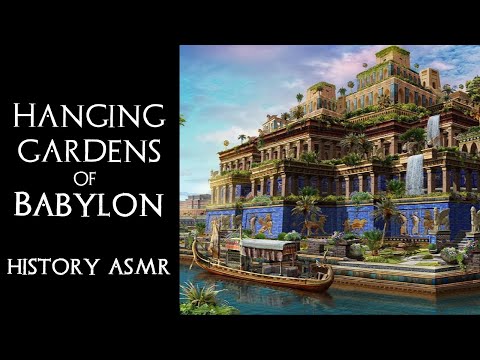
Nebuchadnezzar II undertook ambitious construction projects, including the enlargement of the city walls and the creation of the famous Hanging Gardens.
Archaeological Discoveries:
Excavations at the site of Babylon have revealed numerous artifacts, including clay tablets with cuneiform inscriptions, providing valuable insights into the daily life and culture of the ancient Babylonians.
Background image credit: Александр Михальчук, CC BY-SA 4.0, via Wikimedia Commons
Last updated:






![Ancient Knight Awakens & Vows To Protect You [M4A] [Fantasy] [ASMR RP] [Knight Speaker] [Comfort]](https://i.theasmrindex.com/uploads/thumbs/EuGBUbWIEHg.jpg)







![[ASMR] Ancient Egyptian Synth guards you ~ 𓊪𓄿𓃀𓋴 [M4A] [Roleplay]](https://i.theasmrindex.com/uploads/thumbs/gctKaAh2igw.jpg)


![[ASMR] Ancient Egyptian Synth befriends you ~𓄿𓋴𓅓𓂋 [M4A] [Roleplay]](https://i.theasmrindex.com/uploads/thumbs/ZAv-VUfwHw4.jpg)