ASMR: All Christian Church Branches and Independent Churches with facts | ASMR soft spoken

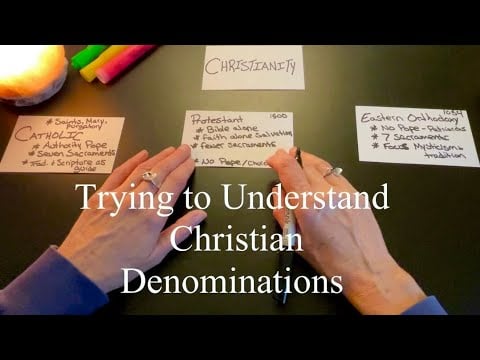
Christianity has various denominations and branches that have developed over the centuries due to theological differences, historical events, and cultural contexts. There can be significant diversity in beliefs, practices, and interpretations of Christianity.
#asmrfacts #asmrhistory #historyfacts #asmrtracing #asmrsoftspoken #christianculture #catholicism #orthodoxy #protestantism #religiousbeliefs
Roman Catholicism: The largest Christian denomination, led by the Pope in Rome. It has a hierarchical structure and places a strong emphasis on tradition, including the teachings of the early church fathers.
Eastern Orthodoxy: This branch includes the Eastern Orthodox Churches, such as the Greek Orthodox Church, Russian Orthodox Church, and others. It is characterized by its rich liturgical traditions, iconography, and emphasis on mysticism.
Protestantism: A diverse movement that emerged during the Reformation in the 16th century. Protestants reject certain teachings and practices of the Roman Catholic Church. Major Protestant denominations include:
Lutheranism: Founded by Martin Luther, emphasizing salvation by faith alone and the authority of Scripture.
Anglicanism: The Church of England and its various offshoots. Anglicans have a broad range of beliefs and practices, from high church (similar to Catholicism) to low church (more Protestant in nature).
Calvinism/Reformed: Based on the teachings of John Calvin, emphasizing predestination, the sovereignty of God, and the authority of Scripture.
Methodism: Founded by John Wesley, emphasizing personal piety, social justice, and the importance of small groups.
Baptists, Pentecostals, and Evangelicals: Representing a variety of movements with diverse beliefs, but often sharing an emphasis on personal conversion and an active faith.
Oriental Orthodoxy: This includes churches like the Coptic Orthodox Church, Armenian Apostolic Church, and others. They separated from the rest of Christianity after the Council of Chalcedon in 451 AD over Christological differences.
Assyrian Church of the East: Often referred to as the Nestorian Church, it is an ancient Christian church that traces its origins to the early Christian communities in the Middle East.
Independent and Non-denominational Churches: Some Christians choose not to align with a specific denomination and instead attend independent or non-denominational churches. These churches vary widely in their beliefs and practices.
Última actualización: