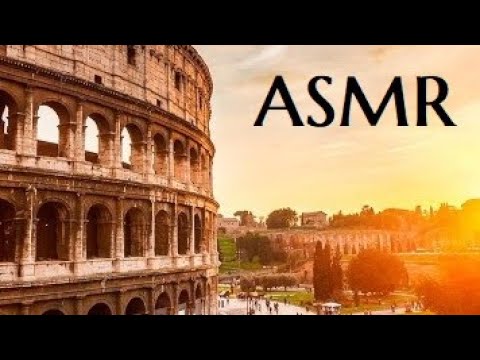
ASMR : Ancient ROME in 30 Facts | ASMR soft spoken facts

ASMR hisotry facts : Step into the grandeur of Ancient Rome, from its mythical origins rooted in the tale of Romulus and Remus to the grandeur of the Roman Empire, discover lesser-known facets of this ancient realm
#asmrfacts #asmrwhispering #asmrhistory #ancientrome #ancientcities #romanempire #historyfacts #whisperedfacts
Ancient Rome, one of the greatest civilizations in history, emerged on the Italian Peninsula around the 8th century BCE and grew into a vast empire that spanned three continents. Lasting for over a millennium, its influence on Western civilization remains profound.
Founding and Mythical Origins:
According to legend, Rome was founded in 753 BCE by twins Romulus and Remus, abandoned infants who were raised by a she-wolf. The brothers later quarreled, resulting in Romulus killing Remus and becoming the first king of Rome.
The Roman Republic:
The Roman Republic, established in 509 BCE, marked a shift from monarchy to a representative form of government. It was characterized by a complex system of checks and balances, with elected officials and a Senate guiding political decisions. During this period, Rome expanded its territory through military conquests and alliances.
Punic Wars and Imperial Expansion:
The Punic Wars (264–146 BCE) with Carthage were pivotal, leading to Rome's dominance in the Mediterranean. General Hannibal's daring crossing of the Alps and the eventual destruction of Carthage solidified Rome as a formidable power. Rome's territorial reach extended from the British Isles to Egypt, creating a vast and diverse empire.
The Roman Empire:
In 27 BCE, Augustus became the first Roman Emperor, marking the beginning of the Roman Empire. The Pax Romana, a period of relative peace and stability, characterized much of the empire's early years. Rome's engineering marvels, such as aqueducts, roads, and monumental structures like the Colosseum and the Pantheon, showcased its architectural prowess.
Roman Society:
Roman society was stratified, with citizens, non-citizens, and slaves occupying distinct social classes. The family was central to Roman life, and the paterfamilias held significant authority. Education, predominantly for the elite, emphasized rhetoric, philosophy, and literature.
Religion and Mythology:
The Romans were polytheistic, worshipping a pantheon of gods and goddesses. They adopted and adapted many aspects of Greek mythology. Religious rituals permeated daily life, and temples dedicated to various deities dotted the landscape.
Decline and Fall:
The decline of the Roman Empire is a complex process involving internal strife, economic troubles, and external pressures from invading barbarian tribes. In 476 CE, the last Roman emperor, Romulus Augustulus, was deposed by the Germanic chieftain Odoacer, traditionally marking the end of Ancient Rome.
Ancient Rome's legacy endures in fields like law, governance, architecture, and language, shaping the foundations of Western civilization. The Roman Empire's rise and fall remain a captivating narrative that continues to captivate historians, scholars, and enthusiasts alike.
Last updated: